

3 Art Selling Mistakes That Cost You the Sale
I walked into two shops in Jerusalem the same week. One sold me two hats I never planned to buy. The other lost a sale it had already made.

What Collectors Are Actually Buying
The most repeated advice in the art world is also the most expensive: make good art, and it will sell itself. It won't. I watched that idea fail in real time this spring, standing in a gallery in Jerusalem, wanting to buy work I never ended up owning.
If you're trying to work out how to sell more art, the answer is almost never more art. The three art selling mistakes I see most often have nothing to do with the quality of the work. Artists hide their prices. They let a buyer's enthusiasm cool before answering. And when the economy feels shaky, they shrink their work instead of standing behind it.
When people shop, they're rarely buying only the object. They're buying a souvenir of how they feel in that moment. Interrupt that feeling and the right price won't save you.
I spent Passover week in Israel with my husband, Ron, our daughter, Talia, and our son, who moved there right after college. I left my laptop at home for the first time in years and powered down my phone for the holiday. What I brought home, besides two hats and an indefensible quantity of new art supplies, was the clearest lesson in sales psychology I've had in a long time.
This article expands on episode 256 of The Inspiration Place. The show notes, including the brush-tip pens I bought twice in one week, are at schulmanart.com/256.
A Tale of Two Shops
In one week I walked into two shops that wanted my money. One of them got it twice. The other lost a sale it had, for a few minutes, already made.
The artist studio
The first was an artist's studio on a well-known block of studios just outside the Old City. I've visited that block on every trip to Israel. This was my third trip, and the first time I walked out empty-handed.
Because it was the week of Passover, the studio had built an exhibit around Haggadahs — the illustrated books we read at the Seder, which tell the story of the Israelites being freed from slavery in Egypt. Some were by the artist in residence. Others came from around the world. Because Jewish communities scattered across so many places over so many centuries, Haggadahs carry the artistic fingerprints of wherever they were made: medieval Spain, Sarajevo, and dozens of other traditions and languages.
On the wall, alongside the books, the visiting artist had hung framed, hand-embellished numbered prints. Some had gold worked in by hand. They were printed on handmade paper with the kind of surface you want to touch. I don't usually buy prints. I wanted one of these. I had narrowed it down to three.

There were no prices on the wall.
I asked the assistant in the gallery how much they were. She didn't know, and she couldn't find out. Her suggestion was that I come back the next day and speak to the artist.
The next day was the day before Passover — the busiest travel day of the year in Israel. Picture being told, on the Tuesday before Thanksgiving, to come back Wednesday. We were leaving town. I wasn't going to make it.
I still wanted the work. I was ready to buy. The assistant photographed the three pieces, and I left my WhatsApp number and asked them to send me prices and shipping information to the United States.
The hat shop
Later that week we walked into a hat shop.
In Israel, many women cover their heads, and how much hair gets covered depends on how observant they are. My son is part of a religious community, and I wanted to be respectful of him and of the people around him — while also, I'll admit, still looking good.
I was confused when I walked in. Most of what I saw looked like something Queen Elizabeth would have worn to a wedding. So I put one on and told the shopkeeper I didn't think it was quite right for the occasion.
She looked at me and said that with what I was wearing, I looked like an American in Israel rather than an Israeli. Then she apologized for being blunt. She didn't need to. Israeli culture is forthright, and so am I.
So I said: I want to look like an Israeli. Help me pick out a hat.
She showed me a few. More importantly, she showed me how to wear them. I walked out with two.
What people are buying is a souvenir of how they feel in that moment.
Mistake Two: Letting the Moment Cool
The next day, my phone buzzed. The artist had messaged me on WhatsApp. He introduced himself warmly and asked me to come meet him at the gallery.
He did not tell me the prices.
By then it was the day of the Seder and we were traveling. I want to be precise about what happened inside me, because it's the entire lesson: there was nothing wrong with his message. There was everything wrong with its timing.
Twenty-four hours earlier I had been standing in front of that work, caught up in it, in a city I love, during a holiday that means a great deal to my family. I would have handed over a credit card without blinking — the way I did in the hat shop, the way I have on earlier trips to those same studios. By the time he wrote to me, that had cooled. I eventually asked for the price out of pure curiosity, and I already knew I wasn't buying.

And the follow-up has to answer the question that was actually asked. He answered a different one. He wanted a meeting. I wanted a number.
What the Hat Shop Got Right
Look at what the shopkeeper actually did, because none of it required charisma or a script.
She helped instead of pitching. She asked what the occasion was, looked at what I was wearing, and made a recommendation. Then she taught me how to wear the hat — which is the equivalent of an artist showing a collector how a piece will live in the room it's going into.
Every price was clearly labeled. Not one of them was a secret. And she never once said a price out loud.
She kept my attention on the experience, not the transaction. She never told me one was cheaper. She never made me compare. She kept me looking in the mirror at how the hat looked on me.

The hats weren't necessities. One of them I'll wear maybe twice a year. I bought them because the shop made the decision easy while the feeling was still alive. I wanted the artwork for exactly the same reason — and by the time the price arrived, the feeling it would have preserved was going back and forth on a messaging app.
And for the record: hats are art.
Try this: Walk your own buying path as a stranger. Open your website on your phone. Pick one specific piece and try to find its price, its size, and its shipping cost, then try to pay for it. Time yourself. Whatever slows you down is slowing your collectors down more.
Mistake Three: Shrinking Your Work When the Economy Feels Uncertain
On our monthly Ask Miriam Anything call inside the Artist Incubator, a client asked a version of a question I hear constantly: because of these economic times, a lot of artists are focusing on smaller works to increase their sales. What do you think of that?
Whenever a question opens with "due to economic uncertainty," that's usually a thought a great many people are having at the same time. The art market isn't immune to broader conditions, but it doesn't move in lockstep with the headlines either, and it isn't one single market.
My honest answer is that I'd be careful with it. Here's how I think about size and price.
The empty living room
Picture a completely empty living room. The homeowner has money for one purchase. A $400 end table or a $4,000 couch?
The couch. It's the more expensive item and it's still the one they buy first, because it's the one the room needs.
Now the room has a couch and nothing else. A $2,000 painting to hang over it, or a $400 painting for the corner? Same logic. The wall above the sofa is the visible gap.

When I look at what sells on Bluethumb, the Australian online art marketplace, the top-selling work tends to sit in roughly the $2,000 to $3,000 range at sizes made to hang above a sofa.
The little painting for the corner is the one that gets cut when money is tight, because nobody needs it yet.
Which doesn't mean small work is a mistake. Small pieces are excellent entry points, gifts, studies, and first purchases for a brand-new collector. The mistake is making them your primary offer because you've quietly decided nobody can afford the real thing.
How to Sell More Art Without Making More Art
Every one of these mistakes is the same mistake wearing a different outfit: putting an obstacle between a person who wants your work and the moment they can have it. Here's the audit I'd run on your own business this week.
- Every available piece has a visible price — in the studio, at the show, on the site, in the caption.
- Your website accepts payment. No "email for pricing."
- Shipping costs are stated, or instantly calculable at checkout.
- Anyone who speaks for you — assistant, gallery, booth-sitter, studio partner — can quote a price without calling you.
- Inquiries get a reply the same day, ideally within a few hours.
- Your first reply answers the question you were actually asked, and contains a way to pay right now.
- Your larger, statement-sized work is visible and purchasable, not buried behind an inquiry form.
- Small work exists as an entry point, not as your whole strategy.
If you want the longer version of how I teach this — the language, the positioning, and the sequence behind it — I put together a free masterclass on selling more art.
I want to be fair to that artist. He may not have hung his own work, may not have set the prices, and may not have known what his assistant told me. But that's true of most lost sales. Nobody decides to lose them. They leak out through small, invisible obstacles that feel like nothing from the inside and feel like a closed door from the outside.
Frequently Asked Questions
Should I put prices on my artwork?
Yes — in the studio, at shows, on your website, and anywhere else a piece appears. Leaving prices off doesn't create intrigue. It gives an interested buyer an errand, and errands get postponed.
How fast should I respond to someone interested in buying my art?
Within hours whenever possible, and the same day at the outside. A collector standing in front of a piece is in a very different state than the same person two days later, back home and back in their routine.
What should my first reply to a collector's inquiry include?
The price, the shipping cost, and a way to pay. Answer the exact question you were asked rather than redirecting to a studio visit or a phone call. Relationship-building works better after buying has been made easy, not as a precondition for it.
Should I make smaller, cheaper artwork during a recession?
Be careful about making it your primary strategy. The small piece is usually the optional one in a room, which makes it easier for a buyer to postpone. Small work is a good entry point, but a weak centerpiece.
Isn't making it easy to buy the same thing as being pushy?
No, and the hat shop is the proof. The shopkeeper never pushed, never mentioned price, and never asked me to compare options. She helped me, showed me how to wear what I was trying on, and had every price clearly labeled so I never had to ask. Being easy to buy from is hospitality.
Sources
- Hiscox, Online Art Trade Report 2018 — the 90% price-transparency figure, cited with its original scope (new online buyers) and year
- UNESCO, "The Secret Story of Sarajevo Haggadah" — background on the illuminated Haggadah tradition and its cross-cultural artistic influences
- Bluethumb — Australian online art marketplace referenced for observed price ranges of top-selling original work
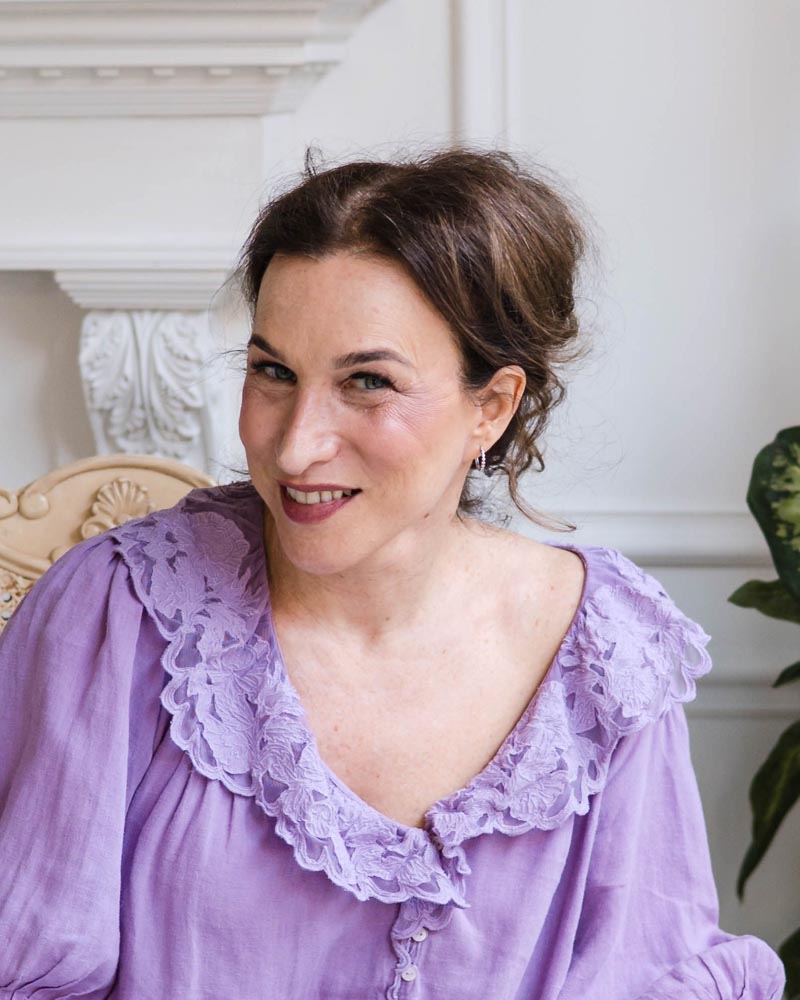
About Miriam Schulman
Miriam Schulman is an artist business coach, working artist, and author of Artpreneur: The Step-by-Step Guide to Making a Sustainable Living from Your Creativity, published by HarperCollins Leadership. After building her own multiple-six-figure art business, Miriam created The Inspiration Place, a podcast ranked among the top 0.5% of podcasts worldwide by Listen Notes. Through her coaching programs, podcast, and book, she has helped thousands of visual artists strengthen their marketing, attract collectors, and build sustainable art businesses.
Ready to Stop Losing Sales You've Already Earned?
The Artist Incubator is my coaching program for artists building a real income from original work — pricing, positioning, and the systems that let collectors buy in the moment they want to.
Start the Artist Incubator →