

How to Price Art Like a Professional Artist
Raising your prices isn't about finding a braver number. It's about curating what you sell, choosing which buyer you're building for, and giving collectors a ladder to climb.
The Short Answer: How to Price Art Like a Professional Artist
How to price art like a professional comes down to three decisions, made in this order: curate what you sell so everything public represents your current standard, set your flagship originals at a price your ideal collector would find credible, and build an entry point beneath them using prints rather than cheap originals. Pricing is positioning before it's arithmetic.

One thing up front: this isn't a formula. I'm not going to hand you a number to multiply by your square inches, because that arithmetic is part of what got most artists stuck in the first place. What follows is how to decide what your work should be worth, and how to move your prices there without panicking.
I hear a version of the same sentence almost every week. I know I'm probably underpriced, but if I raise my prices, nobody will buy. Or my personal favorite: I get pushback even at these low prices, so clearly I can't charge more.
That second sentence sounds like evidence. Usually it means you've built your business around the person least likely to ever buy from you. If you're pricing your work so that the most price-sensitive, bargain-hunting stranger on the internet won't complain, you're running a garage sale. It feels safer and more generous. What it does is cap your demand, attract buyers you don't want, and leave you needing more and more sales to earn the same money.
This is extremely common, and nobody taught you how this part works. I've been a working artist for more than two decades, I've sold my own work at every price point I'm describing here, and I coach professional artists through this transition inside my Artist Incubator program.
Prefer to watch? This article comes from Episode 394 of The Inspiration Place. You can watch the full episode here.

Garage Sale Mentality: The Habit That Caps Your Prices
The thing that keeps more artists underpriced than any spreadsheet error is what I call garage sale mentality, and it sounds like this: I have old work, and sometimes I get a sale on Etsy. It doesn't really represent what I'm making now, and honestly I don't even like it anymore. But if it sells, it sells.
Stop cleaning out your attic in public.
When you put everything you've ever made up for sale, especially work you've outgrown, you're broadcasting something whether you mean to or not: I don't know what's valuable. I'll sell anything. I'm not sure what I stand for as an artist. Collectors read that. Galleries read it especially. So do people who know nothing about art, because they're reading the same signals they read in every other kind of purchase.

The opposite of a premium brand isn't low prices. It's no curation.
Target sells soccer balls, jewelry, handbags, and apples. Tiffany sells jewelry. That's the entire difference, and it has nothing to do with craftsmanship.
The gallerist filter
Here's a filter I gave an Artist Incubator member recently. If a gallerist landed on that one print you have listed on Etsy, and it was the only thing they ever saw of your work, is that what you'd want to be judged on?
Nobody browses your shop the way they'd walk through the Met. They land on one page, one image, one listing, and they make a split-second judgment about you as an artist. It isn't fair. It's still true. If the first thing they see is an old piece you don't like anymore, priced like you're trying to get rid of it, they'll assume the rest is negotiable, random, or not serious. Many won't look further to find out.
What to show instead
The work you show publicly should support your current positioning and your current style, wherever you show up. Stop treating your website like an art history survey course, with work from 2005 sitting next to what you painted last month. Show your most recent collection.
If your work is evolving, wonderful. That's what's supposed to happen. Older inventory just belongs somewhere else:
- A private studio sale, locals only
- An open studio event, where a visitor can discover a piece outside your current collection
- A quieter corner of your studio rather than your main wall
The condition is that it should still be work you believe in. If it isn't, you have more permission than you think. Van Gogh painted over his own canvases rather than let weak work stand. Monet, after cataract surgery late in his life, looked again at some of his paintings, decided they didn't hold up, and destroyed them. Not everything we make is worth selling, and insisting otherwise holds you to a higher standard than Monet and Van Gogh.
Your public shop isn't storage. It's marketing. Curating signals leadership, taste, and intention, and that's what makes a buyer feel safe paying you more.
Your job isn't to sell everything you've ever made. Your job is to be known for something, and price it like you mean it.
Why Buyers Don't Pay for Your Hours
Almost every pricing guide written for artists runs on some version of the same formula: hourly wage times hours worked, plus materials. It's tidy, it produces a number, and that's why it's everywhere. It also installs a ceiling, because it prices your effort instead of your work. Get better and faster, and the formula rewards you with permission to charge less.
Your buyers don't care how long a piece took. They care how much they want it. That cuts both ways, and the good side is the one artists miss: if a piece came together quickly, you're still allowed to price it high.
This lands hardest on artists doing intricate, labor-heavy work, who tend to assume the labor is the argument. The labor is real. It just isn't the part the buyer is paying for.

Two other habits keep artists underpriced, and neither is about math. One is rejection: a low price is a way of guaranteeing fewer noes. The other is building your entire price structure around the person most likely to object rather than the person most likely to buy, which is worth spending real time on.
Going Full Time Is Usually a Pricing Problem
I get asked constantly how to transition from hobby artist to full-time artist. People expect me to talk about Instagram, or list growth, or finding more hours. For most artists, it's a pricing problem: you're trying to build a full-time income on hobby pricing.
I'll anonymize this one, because I'm never here to shame anyone, and I've seen this story often enough that almost any artist could stand in for her.
She lives in an affluent part of the Northeast, the kind of area where people have disposable income, value art, and pay real prices for it. Her work is intricate commissioned portraiture. Legitimate skill, legitimate labor, legitimate artistry.
She asked me how to leave her job and go full time. Then I looked at her website. She was pricing those portraits at $200 — a low price twenty-five years ago, when I was starting out.
I told her she should be charging $1,000, and that if she needed to ease into it, she should move to $750 immediately.
At $200, you're not building a business. You're building a treadmill.

At $200 she can work her face off and never generate enough margin to make the leap. Once she moved into the $750 to $1,000 range, the math of going full time started to become realistic, and not because she'd become a better artist overnight or gained a single follower.
If you're sitting there thinking you can't go full time yet, look at your prices before you look at anything else. You might not need a new life. You might just need new numbers.
What Pushback Actually Means
That same artist said the thing I hear from nearly everyone: but Miriam, I get pushback even at $200.
Most of the people pushing back at $200 aren't going to buy from you at $200 either. They can get a caricature drawn in Times Square or photograph their own kid with a phone. Some of them might buy at $150, and that isn't the point. The point is that building your prices around them means designing your business for your least valuable customer, and you'll get complaints anyway.
If someone wants a deal because the deal is the point, they don't want your art. They want the feeling of getting something for nothing.
A real portrait client wants something personal, meaningful, beautifully made. They want a story, quality, and an artist they can trust. In my experience, that buyer tends to respect you more at a professional price, not less, because price signals confidence and standards.
Underpricing can erode trust
I got an email from an artist whose work I liked. They'd put a piece on sale for Black Friday: the original was $1,000, marked down to $750. I spent days emailing back and forth trying to work out whether it was a legitimate original or a print. I bought it. When it arrived, I was still checking. My husband's reaction was, "You paid what? Shouldn't there be another zero after that?"

Price far below what your market expects and you don't read as accessible. You read as questionable. Buyers start wondering whether this is a side thing, whether the quality is consistent, whether you're desperate.
You're building a steakhouse, and a steakhouse isn't for everyone. Don't stand outside arguing with someone who only wants a slice of pizza. Your job isn't to convince bargain hunters. It's to serve the people who already value what you do.
So pushback doesn't mean your price is wrong. Often it means you've crossed the line where bargain hunters start noticing, which is where professional pricing begins.
One artist I coach, Bret Neathery, was selling large paintings at $3,500 and believed his market in Springfield, Missouri wouldn't support more. My argument was simple: someone willing to pay $3,500 will often pay $5,000. He raised his prices by several thousand dollars and kept selling. That's one artist in one market, not a promise about yours, but it's a useful counterweight to the assumption that geography sets your ceiling.
If your positioning is the piece that feels shaky, my Luxury Positioning Checklist is a fast way to audit how your work reads to a higher-end buyer before you touch a single price.
Build a Price Ladder So You're Not Betting on One Number
The goal is to stop relying on a single price point. A price ladder gives collectors a way to enter your world and a way to move up inside it.
- Flagship originals. The work you want to be known for, priced highest.
- An accessible entry point. Prints, in the same aesthetic as your flagship originals so they reinforce rather than contradict.
- Commission tiers. Different sizes, scopes, or levels of involvement at different prices.
- Series and sets. Multiple related pieces sold together.
- Limited editions. Scarcity built in deliberately rather than accidentally.
- Upgrades. A defined path from a first small purchase toward a significant one.
One rule holds the whole thing together: your entry point should support your premium work, not undercut it. That means a $100 or $200 print, not a $100 or $200 original.
A cheap print makes your $5,000 original look like the real thing. A cheap original makes your $5,000 original look negotiable.
I walk through the collector pathway in more depth in my free masterclass on selling more art, and in far more detail in Artpreneur.
When to Raise Your Prices
Several artists I coach raised their prices repeatedly across 2025, and the reasons were all visible from the outside:
- They were selling consistently
- They had repeat buyers
- They were booked out
- Their skill and materials had improved
- They were getting more recognition
- They weren't keeping work in stock
That last one is also how most artists find their actual number. If work is selling consistently and you can't keep inventory, the current price is too low. Raise it a tier and watch what happens. Repeat. This is slower than a formula and considerably more accurate, because it prices against real demand instead of an assumption.
The resentment signal
If you feel resentment or burnout at your current price, that's an enormous tell, and it's the one I used on myself. Every time I started feeling icky about a portrait commission, I raised my price, and the commissions didn't stop.
I remember telling my assistant to double the price on my pet portraits. I got three orders that same week. One came from someone who had already bought at the lower price, and she didn't complain once. My prices had been too low all along.
Keep the cadence simple. Twice a year works, plus after any milestone: a waitlist, new press, a new collection, a sold-out release. You don't need permission and you don't need a perfect moment.
Your Seven-Step Pricing Reset Plan
Here's the whole checklist for how to price your art from the ground up. You can run it this month.
- Remove anything you wouldn't be proud to be judged by.
- Curate your shop like a gallery wall, not a storage unit. Current collection only.
- Pick your flagship work and set a serious anchor price.
- Build the ladder. Flagship at the top, an entry point that supports it, and a pathway between them.
- Raise your prices. Move one tier and let yourself get used to it.
- Update your language. Talk about demand, craftsmanship, and the experience of owning the work rather than hours and materials.
- Practice saying the price like it's normal. Because to your buyer, it is.
That last step isn't a joke. If saying "five thousand dollars" out loud makes your voice wobble, rehearse until it doesn't. Five thousand bananas. Five thousand monkeys. Five K.
Selling cheap work faster is the hardest possible route to a full-time income, and for labor-intensive work it usually isn't a route at all. You get there by selling the right work at the right price.
Frequently Asked Questions
How do I price my art like a professional artist?
Curate what you sell so everything public represents your current standard, set your flagship originals at a price your ideal collector would find credible in the market you actually sell into, then add an entry point using prints rather than discounted originals. Pricing is a positioning decision first: what surrounds the number changes how the number reads.
Will I lose collectors if I raise my prices?
You'll likely lose buyers who were shopping on price, and those buyers rarely sustain an art business. Collectors who buy for meaning and quality tend to respect a professional price, because price signals confidence and standards. In my coaching experience, raising prices more often changes who buys than whether anyone buys.
I get pushback even at low prices. Doesn't that mean I can't charge more?
Not usually. Most people objecting at a low price are shopping for a deal rather than for your work, and dropping lower tends to attract more of them. Pushback often appears at the point where your pricing stops appealing to bargain hunters, which is a sign you've started pricing professionally rather than a sign you've gone too far.
Should I remove old artwork from my website and shop?
If it no longer represents your current work or standard, yes. Someone may land on a single listing and judge your whole practice from it. Older work can still sell through a different container: a private studio sale, an open studio event, or a quieter corner of your studio rather than the front of your public shop.
What is a price ladder, and why do I need one?
A price ladder is a structured range of offers rather than a single price point: flagship originals at the top, a print-based entry point at the bottom, and a pathway between them made of commission tiers, series and sets, limited editions, and upgrades. It lets new collectors start small and move up without forcing you to discount the work you most want to be known for.
How often should I raise my prices?
Twice a year is a reasonable default, plus after any meaningful milestone: a waitlist, new press, a new collection, consistent sell-outs, or improved skill and materials. One more trigger worth trusting is resentment. If you feel burned out or uneasy at your current price, that's usually the number talking.
Should I price my work based on how long it took?
No. Buyers purchase how much they want a piece, not the hours inside it. Pricing by time penalizes efficient work and traps artists doing intricate, labor-heavy pieces at rates no market will support. Price according to demand, the strength of the work, your positioning, and the experience of owning it.
Can I raise my prices if I live in a smaller or less affluent market?
Often, yes. Geography influences a market but rarely sets an absolute ceiling, particularly when you sell online. One artist I coach was convinced his regional market wouldn't support more than $3,500 for large paintings, raised his prices by several thousand dollars, and continued selling. Results vary, but the assumption that your location caps your prices is worth testing rather than accepting.
Sources
- Van Gogh Museum, Amsterdam — institutional research on Van Gogh's working practice, including his reuse of and painting over earlier canvases
- Musée Marmottan Monet, Paris — holdings and scholarship covering Monet's late period, his cataract surgery, and his destruction of work he judged unsatisfactory
- Miriam Schulman, Artpreneur: The Step-by-Step Guide to Making a Sustainable Living from Your Creativity — extended treatment of pricing, positioning, and collector pathways
- The Inspiration Place, Episode 394 — the source conversation behind this article
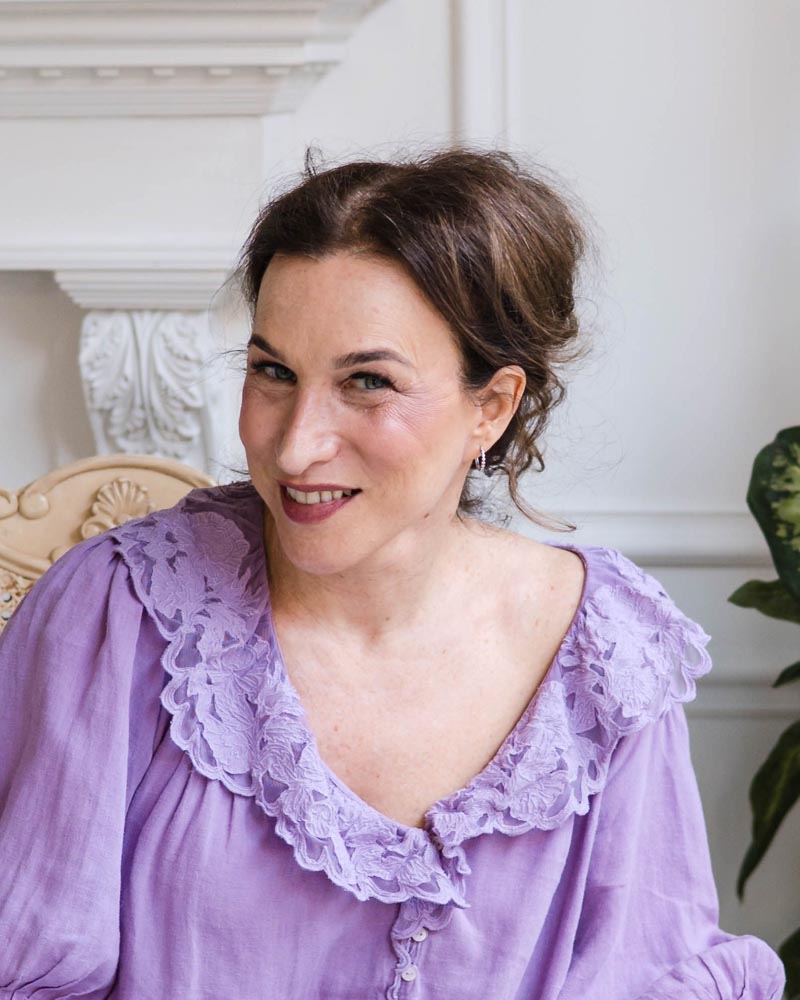
About Miriam Schulman
Miriam Schulman is an artist business coach, working artist, and author of Artpreneur: The Step-by-Step Guide to Making a Sustainable Living from Your Creativity, published by HarperCollins Leadership. After building her own multiple-six-figure art business, Miriam created The Inspiration Place, a podcast ranked among the top 0.5% of podcasts worldwide by Listen Notes. Through her coaching programs, podcast, and book, she has helped thousands of visual artists strengthen their marketing, attract collectors, and build sustainable art businesses.
Ready to Price Your Art Like the Professional You Already Are?
Inside the Artist Incubator you get private coaching, strategic support, and a peer group that will hold the line when you're tempted to discount.
Start the Artist Incubator →